Something written at 6am before the rest of the crew is up, on the second day of a seminar.
We have gone through the first day of classes, An iaido seminar consisting of the Eishin Ryu set for Muso Jikiden Eishin Ryu, and the Kendo Federation iaido set.
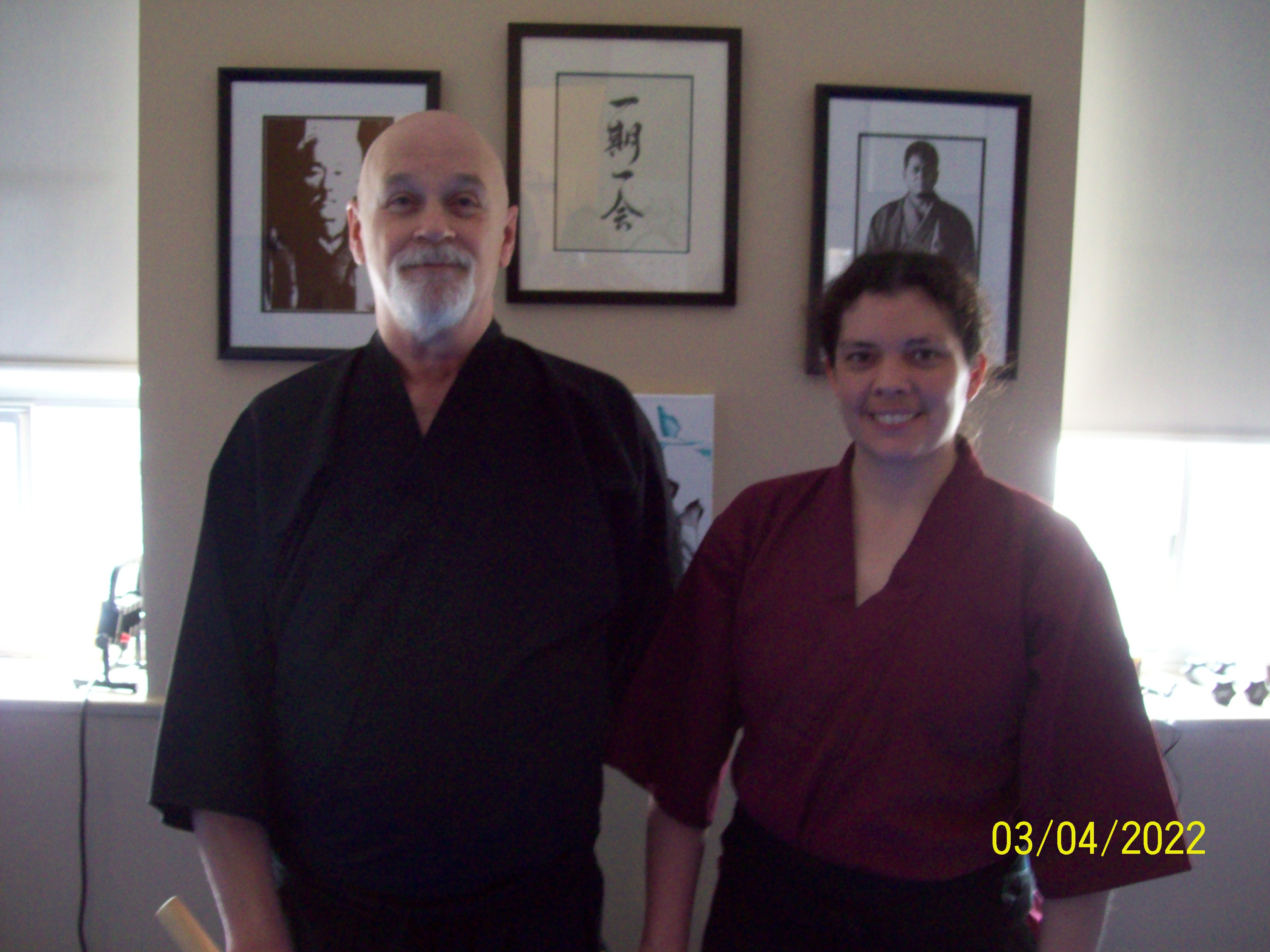
Eric Tribe, newly minted Kendo Federation Iaido 7dan led the day, I was there as well, as the rusty old 7dan (second person in Canada to get 7dan, 17 years ago) to help out.
We worked through the koryu, and there were places we differed in our instruction, our interpretation of the kata. One might think that we would be on the same page, seeing as Eric was originally my student, but it doesn’t quite work that way. He has his way of looking at a kata and I have mine. Both of us are “correct” when we teach. Both of us have a reason for what we teach.
Before you get excited, the main difference is that in his kata, his opponent is standing up, and my is in tate hiza in front of me.
So why the difference? Quite simply, in koryu the kata can be modified in the name of teaching what it means. To get the point across. We are not oblidged to fossilize these kata, we can change them to make a point, or to agree with our personal understanding of iaido. You won’t actually see much difference between us, if you’re just watching, but standing or sitting opponent is something that changes our specific movements. The targets are in different places.
Seitei
In the second part of the day, Ohmi sensei came so we had 3 7dans in the room. Ohmi sensei asked Eric to teach, he being the most recent “graduate” to the 7dan club and so he did. His theme? This stuff hasn’t changed. Now you might think that he missed something, that he hasn’t been in front of the correct hanshi, but trust me, he’s been going to Europe a couple times a year and has seen the ones he should have seen. His message? It hasn’t changed. But he doesn’t look for changes, for little tricks to pass a grade, he looks at the core of the art, and sometimes sees a different emphasis, or a “permission” but he doesn’t see many changes. One he did point out was that in Japan, and therefore in Europe, those who stand, do the seated kata, but standing.
Personally, I was happy to see that, restricting the testing of standing students to the 8 standing kata doesn’t tell me if they understand the first 4 or not. So good on someone for noticing that bit of bother in setting up a test.
And did Eric and I differ in our Seitei? Not by a whisker. The two or three places where he said there was an emphasis or a permission made perfect sense to me, and they were things I’ve done before. About 25 years ago maybe we would say “You don’t like this change, wait 3 years and it will go back to the old way.”
These days I tend to say, “That’s the way that hanshi understands it, if it’s not in the book, it’s permitted, don’t stress about it. Try it and if you don’t like it, don’t do it after sensei has gone away. Do what your sensei tells you to do.
Which more or less means the same.
I hope the folks appreciated the different views in koryu, and the identical views of 3 7dans in the seitei part.
I surely did.
 Seito Bugei Juku