When we talk about riai (the principles behind the art) in iaido we generally talk about what the invisible opponent is doing (the meaning of/in the kata), and of course this is the first step. So how, being good students, do we figure out what’s going on without having sensei take us by the hand and tell us?
With Seitei Gata this is a lot more easy than with most koryu. In Seitei we have the book which contains checkpoints of where the sword and body is at various times during the kata, and how we are to move between these points. From this we can figure out where our opponent is, and what he’s doing.
Take Tsuka Ate, the instructions are to rise up onto our right foot from tate hiza, thrust the tsuka into the suigetsu of the opponent in front (slam the hilt into his solar plexus) and then draw to thrust back at the rear opponent before returning to cut down the one in front. So get a couple of fellow students and go to the end points of each strike. Thrust and have your friend put his suigetsu at that point, now relax as he moves in a couple of inches, that’s him arranged, he sits down. Now thrust to the rear and have your second friend put his suigetsu on the tip of your bokuto. A couple of inches forward and he’s set, everyone sit down. Now go through the kata slowly, in order to hit the front opponent at the correct height according to the book, he has to be upright and damned close, he collapses back onto his heel while you turn and thrust the fellow behind. (We know he collapses allowing you the space to draw because if he doesn’t the final cut doesn’t work.) And the fellow behind… oh, so he’s got to be upright too, so he’d better be upright as you’re hitting the front fellow which means he’s…. grabbing your shoulders. So both of these guys are grabbing for you rather than trying to draw their swords, and it’s only the final cut to the front fellow who has fallen backward that is a full sword technique as we usually think about it. Up to then it’s what I call the jujutsu of sword, you’re inside the range of the usual swing trying to shake off attackers who are grabbing at you while you draw and deal with them.
Let your buddies lay hands on you and then do the kata, see what that does to your posture and your use of the hip turn and all that other stuff sensei is always nagging you about. Does his instruction make a bit more sense now?
The riai of iaido has to start with figuring out what teki is doing because otherwise we are waving our blades in the air with no real feeling of what’s happening.
As I mentioned, this is a bit more difficult when we’re thinking about the riai of koryu as we don’t usually get a book of rules. For koryu (and a more subtle appreciation of Seitei come to that) we have to understand the kihon of the art, when we put the sword at this angle and move it in this way what is it that we are doing? More plainly, if we draw and move the tip across horizontally what are we cutting? We all know that one, so now we know roughly what our opponent is doing and what our target is. Is he back on his heels or up at your height? Do we have to move in now or can we cut him vertically without moving?
All this understanding of what your opponent is doing gives your iaido more feeling, more presence. It gets your iaido to the level of a beginner in any of the arts of kenjutsu or jodo that work with partners… oops did I say that out loud?
Now you know why sensei keeps telling you to roll your eyeballs out of your head, look at teki and stop dancing. Only then can you start getting to the good stuff.
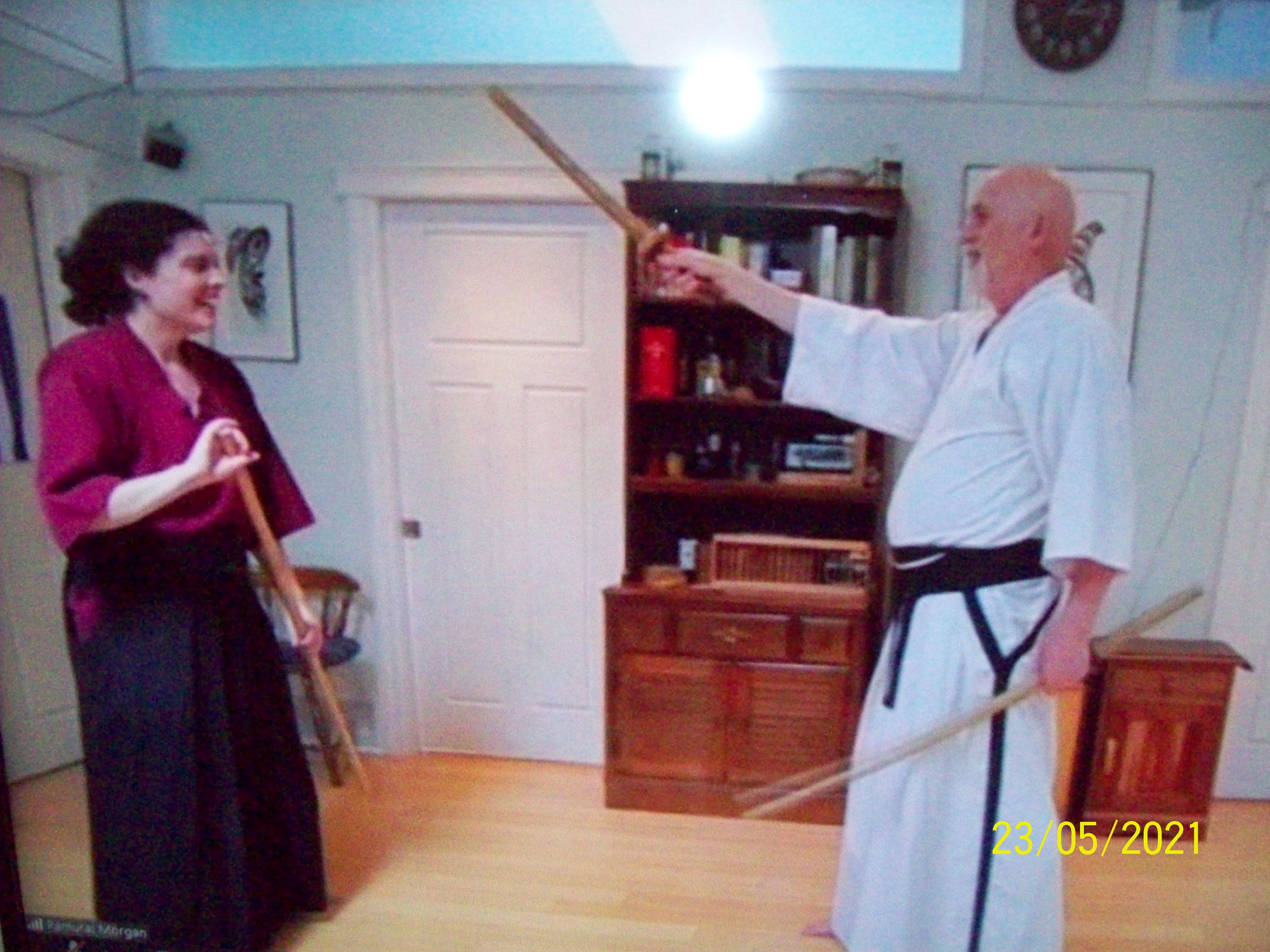
 Seito Bugei Juku