Makes as much sense as some of the stuff I was reading recently conCERNing gradings in the kendo federation. There was quite a diverse set of opinions on what a pass meant, what should pass for what reasons, whether an entire country can deteriorate in its quality, and many other things. All from mid-level ranks I am assuming, since those of higher ranks tend not to discuss things like that.
The reason we don’t give our opinions is because we sit on panels and things are pretty clear. You deserve the rank or you don’t and if we’re doing our job consistantly and fairly there won’t be much reason to opine or discuss. Unfortunately the question (pass/fail) is not reducible to a list of criteria, much as students would like it to be, pass and fail shouldn’t be made a formula. So much from this column of criteria, so much from this other column which has a higher degree of difficulty, a dash of number three column and check to see whether the proper bribes have been paid. Much as it would be convenient to have an algorithm do the gradings, it probably shouldn’t happen. Same reasons why we don’t replace referees in sports with the colour commentators up in the booth watching video of the game. There are nuances that folks don’t see, Joe on his couch at home may be convinced that the umpire is blind, but I’m afraid that umpire has been watching the game from four feet away for 20 years. I’m going with the ump.
“Sensei, what should I do to pass my next grade”?
If you can answer this, you can talk about who should and who should not pass. If you can do this you can sit on grading panels. This is why 3 dans don’t sit on 5dan panels, or Joe at home doesn’t get to make the call.
So big shot, you say, what are the criteria for judging and for passing? Well, in Canada and everywhere else other than Japan, look up the FIK standard guidelines. There is your judging panel, it’s really simple. Follow those guidelines and nobody can complain. For the criteria to pass a test, look to the various other publications from the FIK. You will find judging advice (how to act as a judge, how to judge grade levels), and advice for the other side, what you ought to do as a student. For iaido and jodo that advice is damned clear. Do what’s in the book.
Honestly, read the book.
Now you have all you need to know up to 5dan. Beyond that come other things and some of those are of the class “do we need you”. Let’s go to Japan where that question makes sense (and only there). If we already have twelve hanshi hachidan in Tokyo, do we need another? No? Fine, you’d better be something stratospheric if we’re going to pass you. Do you know this? Of course you do, you’ve been in the system for 30 years. Is this fair? Joe on his couch may not think so, and perhaps it isn’t. But it might be necessary.
I’m reminded of international figure skating where there was such a thing as “it’s his turn”. Those outside the sport may just be horrified at that, but those in the sport may just have the understanding that the top place must be shared amongst nations if the sport is to survive. Unfair? Sure why not, I think so, but it’s not my call, I was in figure skating for 15 minutes and that doesn’t give me the right to have an opinion on what needs to happen in the figure skating world. Joe on his couch certainly doesn’t get a vote.
Please be clear, these sort of considerations of “too many 8dans” only come up in Japan. The rest of the world is not over-crowded at any rank. It is a mis-understanding of the situation if you apply Japanese rules to the rest of the world. This is why I said look at the FIK standard guidelines and not the ZNKR guidelines. These two things are different for a reason. If you think that going to Japan to grade gets you a “Japanese standard”, think again. The judges there aren’t stupid, they know where you come from and they are not going to take the excess number of Hanshi in Tokyo into account when passing you. In fact, if you’ve got a proper sponsor they will have been told that “your home country needs you to have the rank” and you may just catch a break you wouldn’t back home where the judges know you.
Before you start down the road you’re looking at, the difference between ZNKR and FIK standards is in who sits on the panels, not the requirements for each rank. I’ll tell you something else for free, since that’s what you paid to read this, higher ranked judges tend to be easier on the passes than lower ranked judges. Maybe some day I’ll go into that if anyone is interested but it’s “a thing”.
I don’t want a vote on quantum mechanics. If I were to go into CERN and expect folks to listen to my opinions I might do a great deal of damage to Physics… provided they listened to me.
In the normal world, Joe on his couch will be ignored completely, but if, in some strange dimension, he does suddenly get a say in who is safe and who is out, let’s hope he realizes he’s not in a position to give an opinion and keeps his trap shut.
At the water cooler at work, absolutely I will give my opinions on the Higgs Boson, but if CERN ever asks me what they should do next I’ll be telling them to go ask someone who might have a chance of knowing.
Don’t take this the wrong way, I’m all for juniors wanting to know what’s happening in the higher planes of existance, those exaulted spheres of a couple ranks up. Just temper your statements with a little bit of thought. Ranks are only valuable as long as people think they are valuable, if you think they are useless and a total fraud why are you bothering to participate, all you will accomplish is to reduce the confidence for those below you.
Does that mean you should shut up when you see obvious problems with the system? Not at all. Sometimes the system is broken, if you want to figure out how, read the bylaws of your own organization. Read the rules on when gradings are to be held, where and how, who sits on the panel and the rules for passing them. The rules to read are those of your own organization since that’s where grades come from (sorry, but your rank is NOT from Japan, nor is it registered there, nor is it approved in any way from there). Assuming ZNKR rules have anything to do with your own country’s rules is a stretch. (Incidentally, if you have heard of such things, there are no “unwritten rules” by definition. If it’s not written down it is somebody’s fantasy so stop looking for them.) Your country may require more than the standard FIK guidelines, as does Japan, but if it does not, then your rules are different than Japan. Does that mean your ranks aren’t as good as those in Japan?
You won’t know until you look at your average 4dans compared to the average 4dans from Japan. If you find your people have degenerated somehow, or were never up to the same level, that’s a problem for the judging panels to address, not for you to worry about. Your 4dan will continue to be recognized world-wide through the FIK. No country but your own can take it away from you. Can your own country? In Canada you have to “bring the CKF into disrepute” which, to be clear, means you have broken a very serious law. Not parking tickets.
Can Japan take your rank away? No. Can the FIK? No. What can happen if your ranks are totally bogus and out of line with the rest of the world? Well, apart from individuals complaining and threatening “loss of respect”, the single sanction that can be applied by the FIK is the same as if your country no longer has anyone in the kendo federation. Your country can be dropped from the FIK. That’s done by the FIK board, not Japan. Is it likely? It took something like six years for the FIK to get around to removing Iceland (I think it was) due to nobody in Iceland being in the Iceland kendo federation. Your country is not going to be kicked out of the FIK because your folks are ranked too high for their ability. What about 7dans? What if they go to Japan with their undeserved ranks and take work away from Japanese 7dans…… oh. Right, the downside to having poor performers in high ranks is, effectively, zero.
By the way, not paying your dues is the way to not be a member of your organization, not a way to lose your rank. Just in case you were wondering if you had to pay for the rest of your life. But check that against your own country’s bylaws just in case. Can you give your rank back? You probably can, you can offer it and the organization may accept that offer and remove you from the database, so if you really really feel your rank is not deserved, you can do something about it. What would that mean? You don’t sit on a grading panel I suppose.
Rank exists because rank exists.
So your rank quality is well and truly in the hands of your own country. Be better than, be less good than, it’s up to your judges…. oh wait, no it’s not, because all the rank says is that you have met the minimum standard for that rank. You can be well better than your rank, you, alone of everyone in your country, can be better than everyone in Japan. If you’re practicing kendo you can actually prove that. Iaido and jodo, not so much since we don’t have world championships in those arts, but maybe there’s a national championship you can shine at. Oops, we’re back to the same judges as for your rank. If they are clueless at giving you the rank maybe they’re as clueless at judging you one on one with your opponent.
Fine, we’re back to saying “you guys aren’t very good”. it’s all we have so I guess we have to use that.
Still want to say there’s an objective standard for passing and failing? Want to tell me which folks in your organization deserved to pass and which should have failed their last grading?
Go ahead, I’m all ears. Just don’t ask me about Quantum Mechanics.
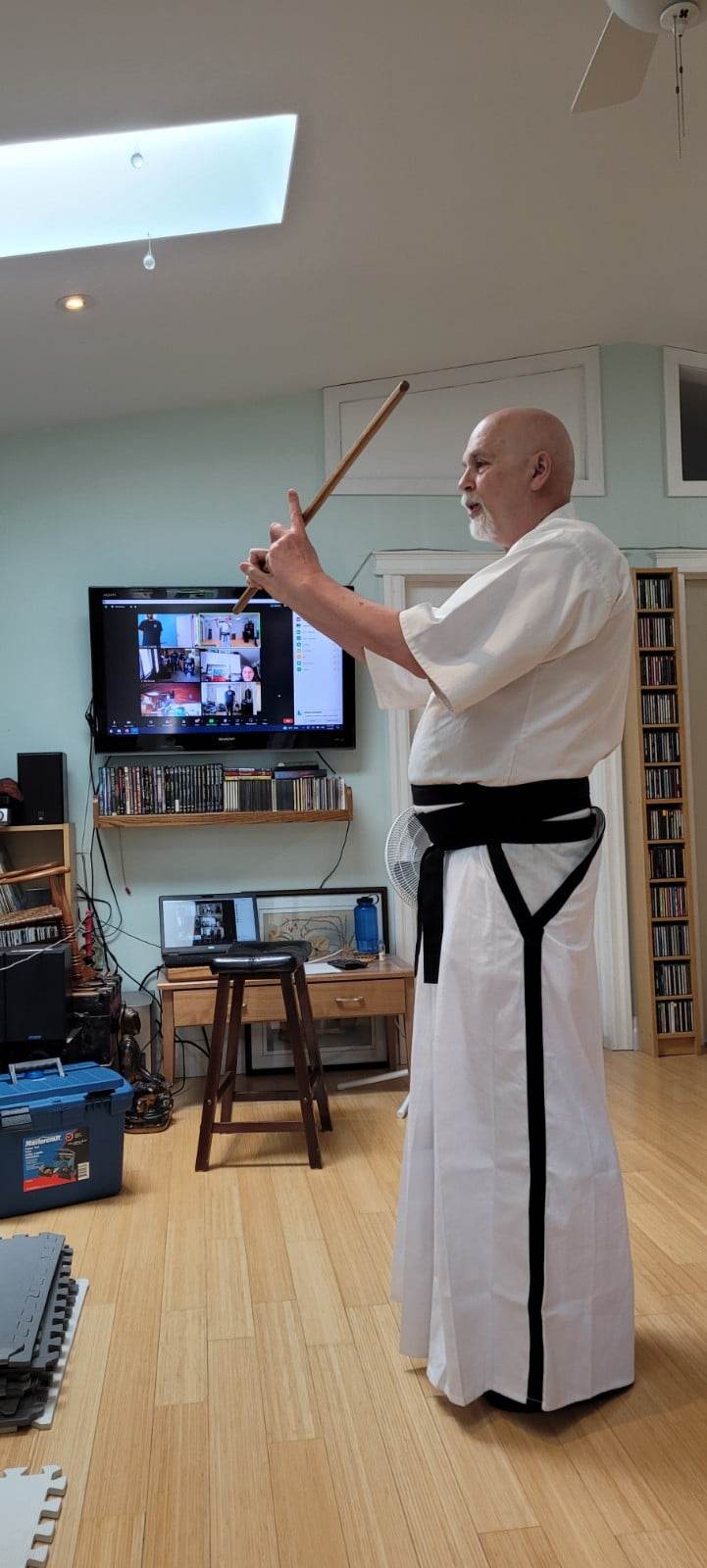
July Niten and Kage seminars:
http://seidokai.ca/kageryu-seminar.html

 Seito Bugei Juku